Introduction
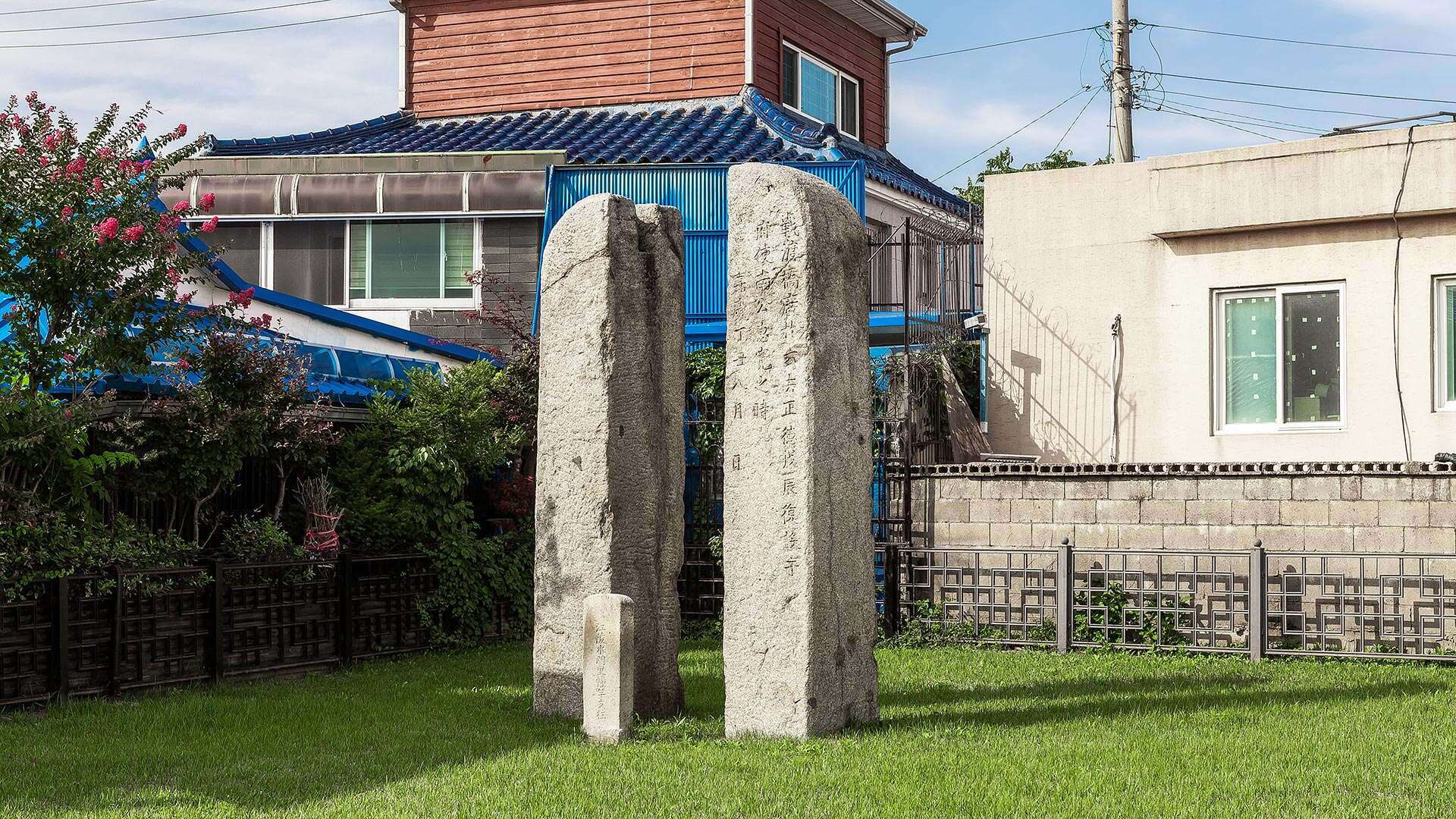
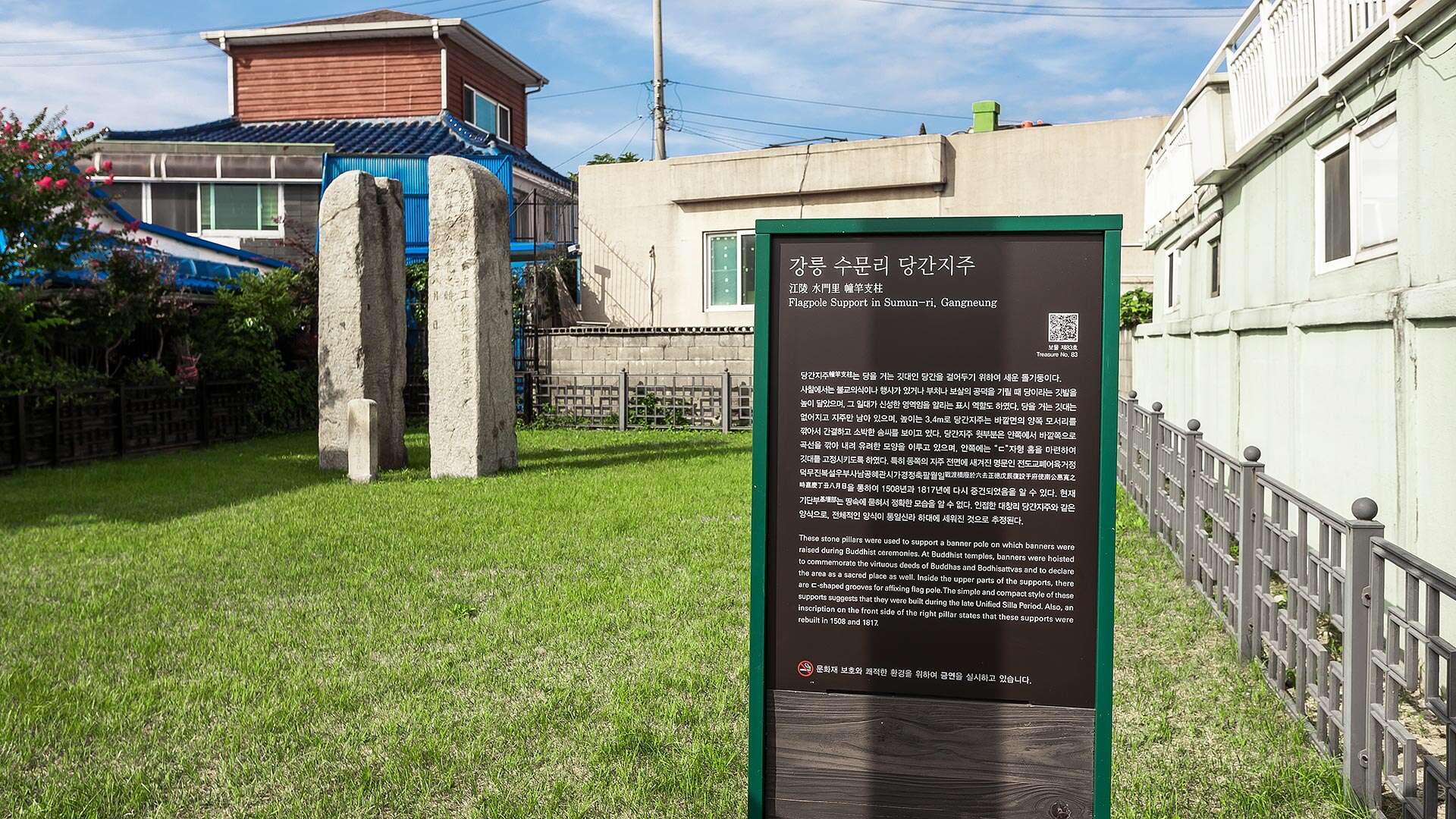
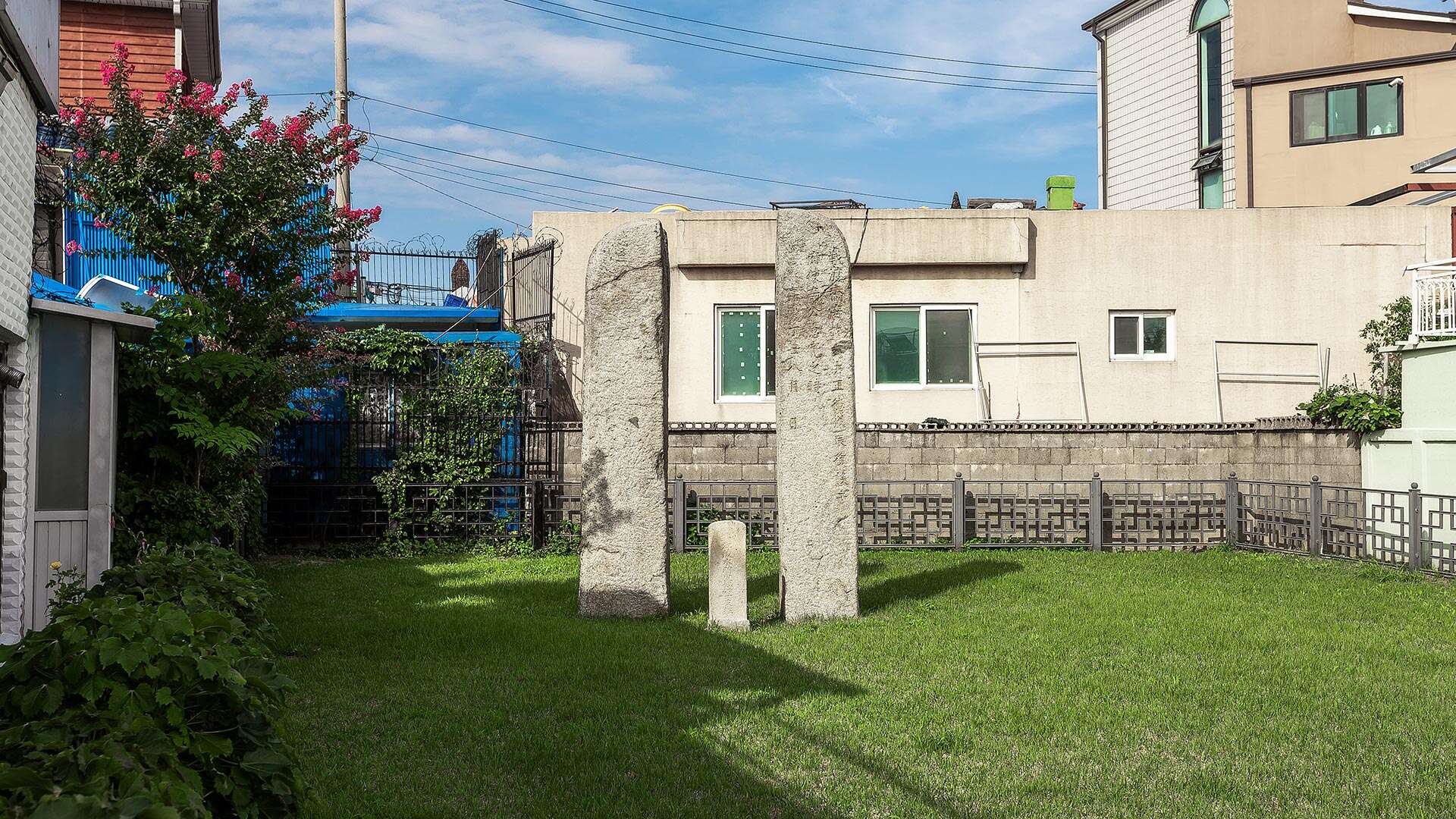
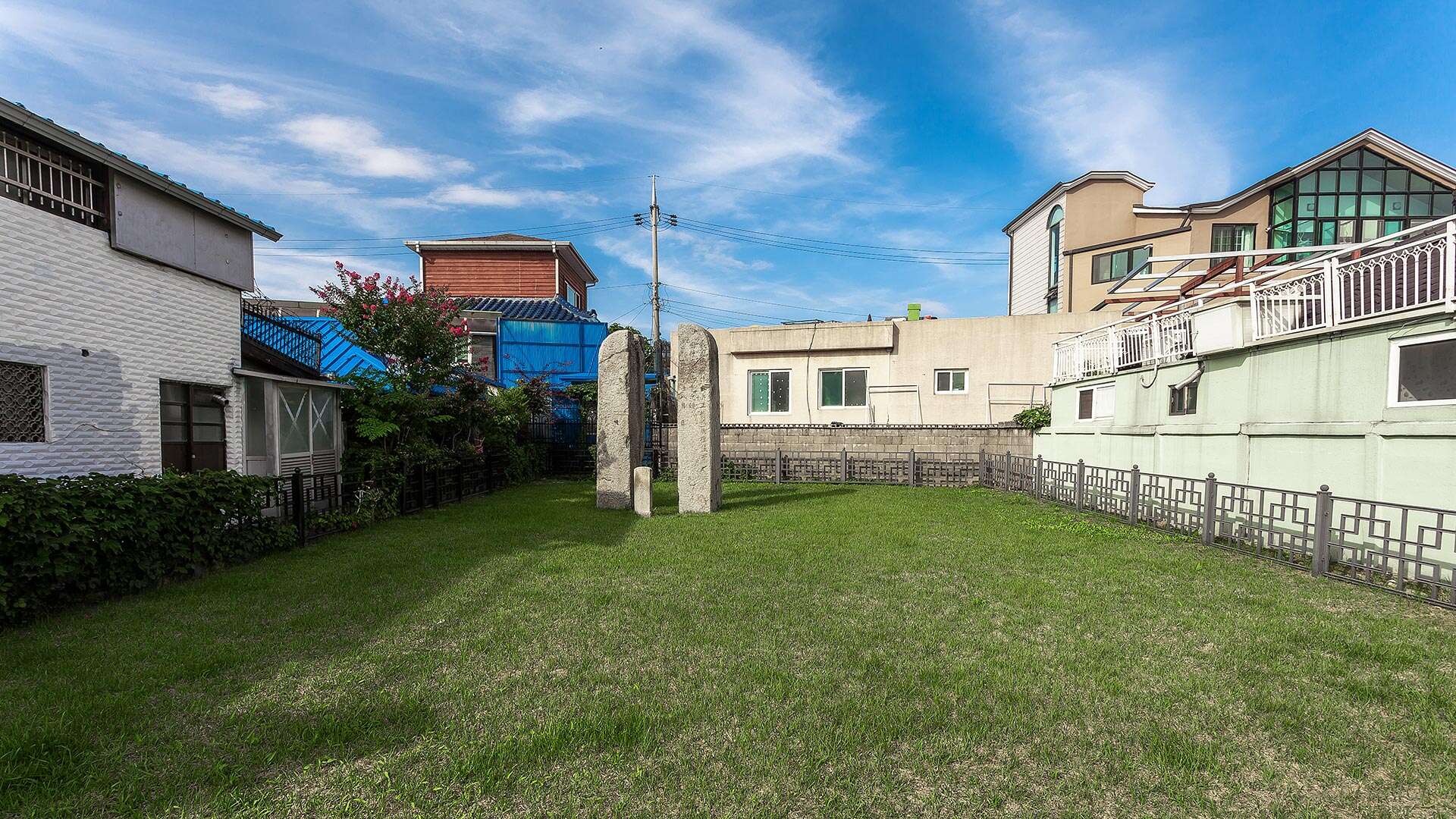
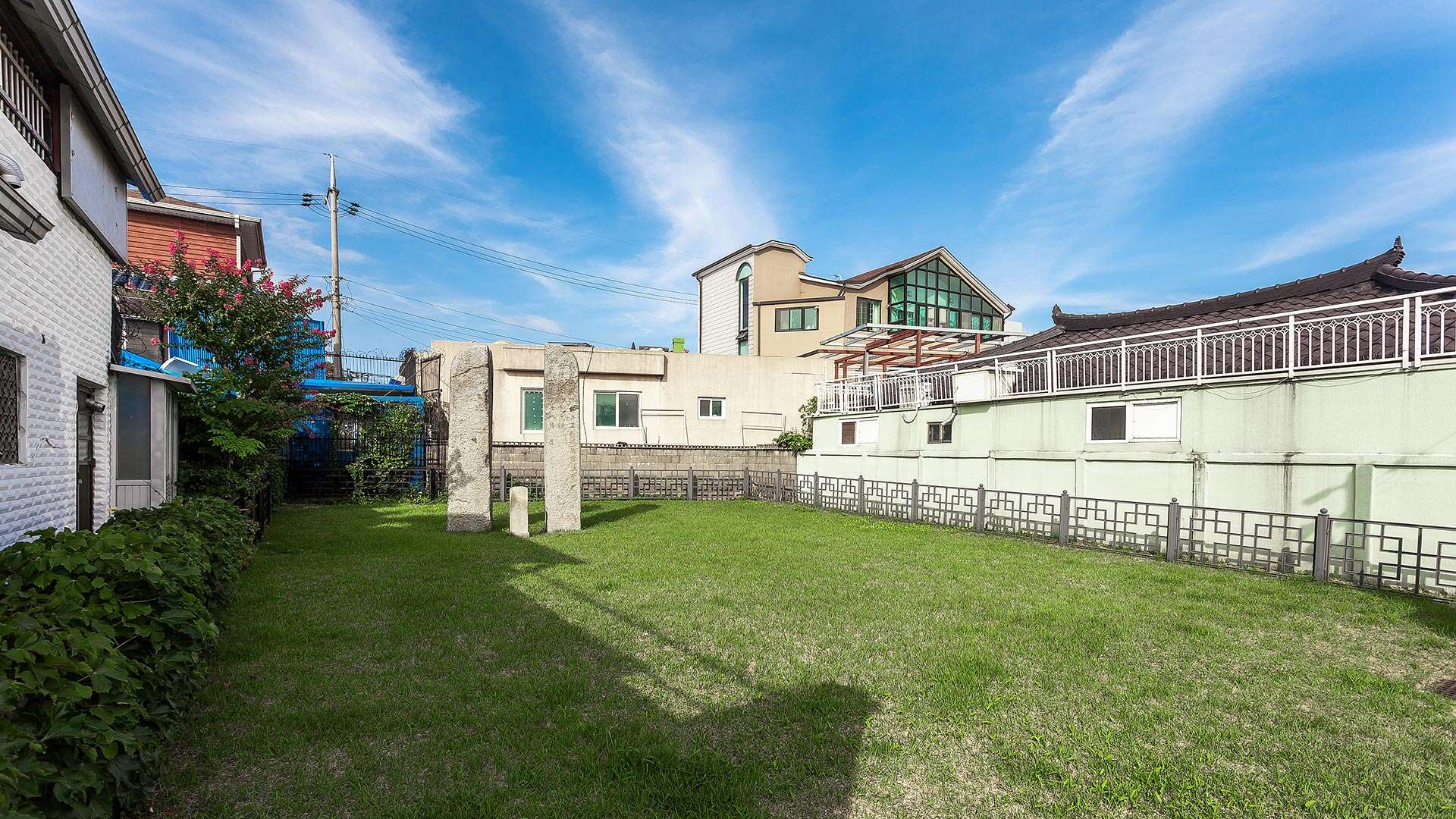
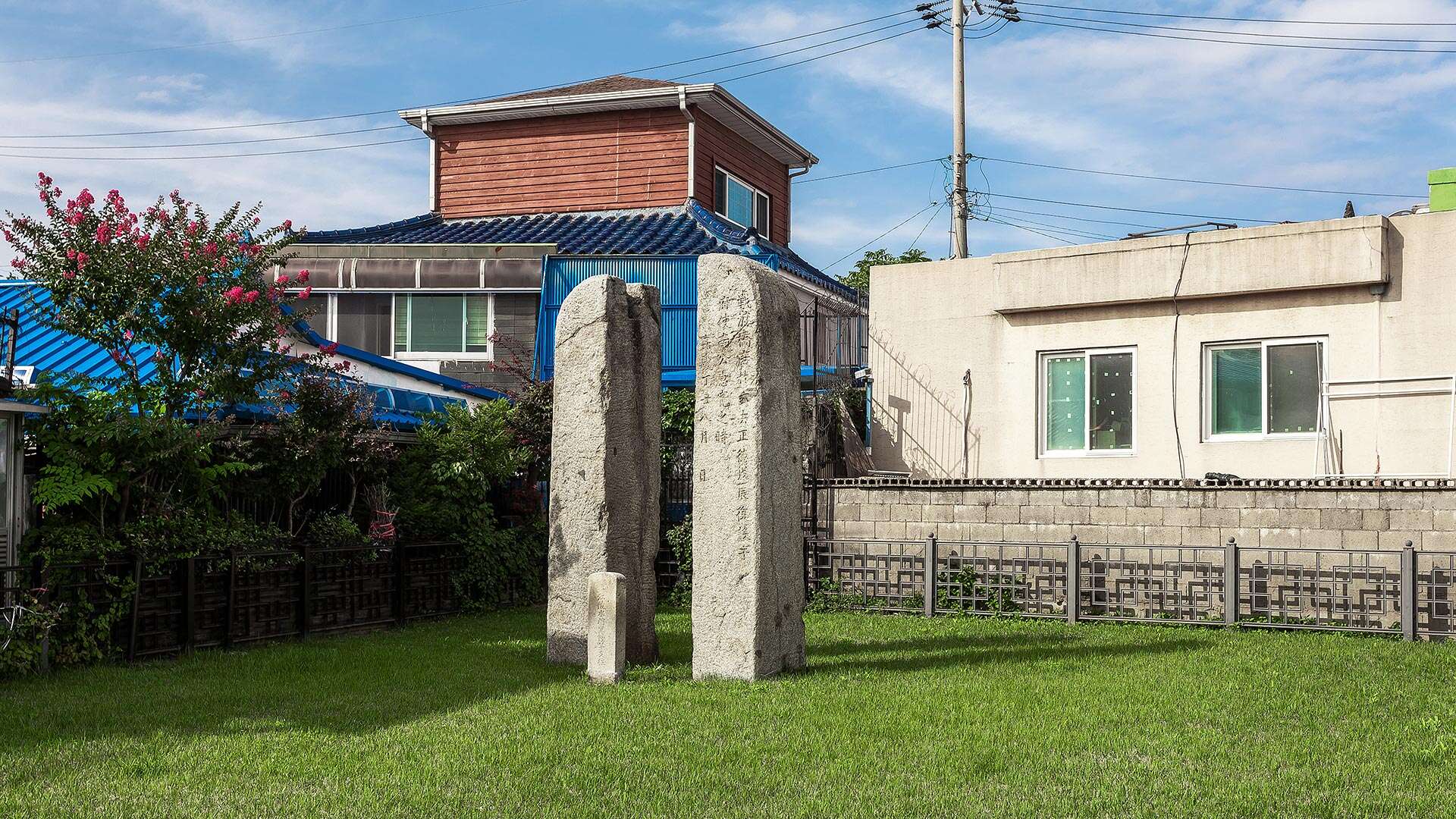
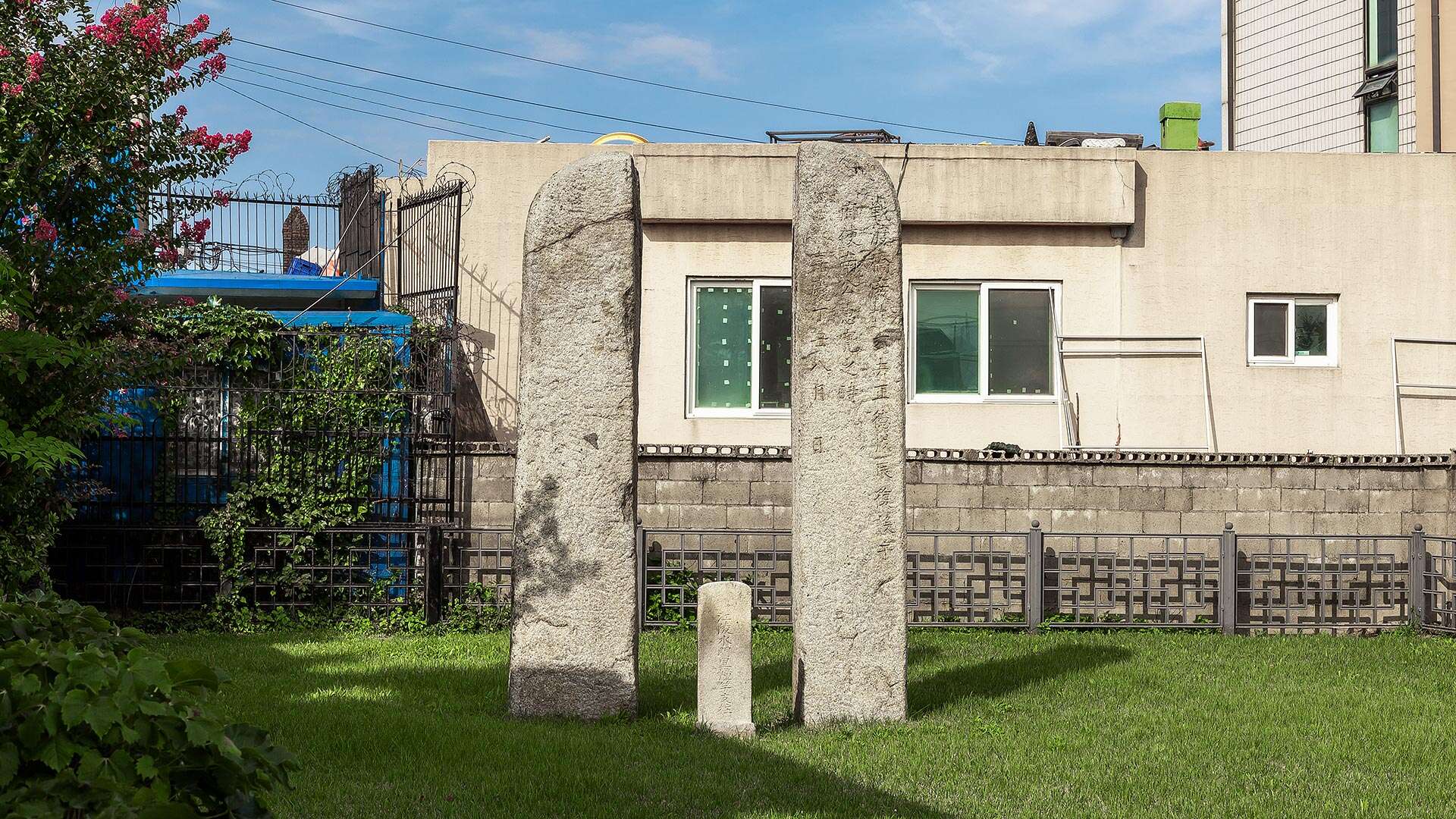
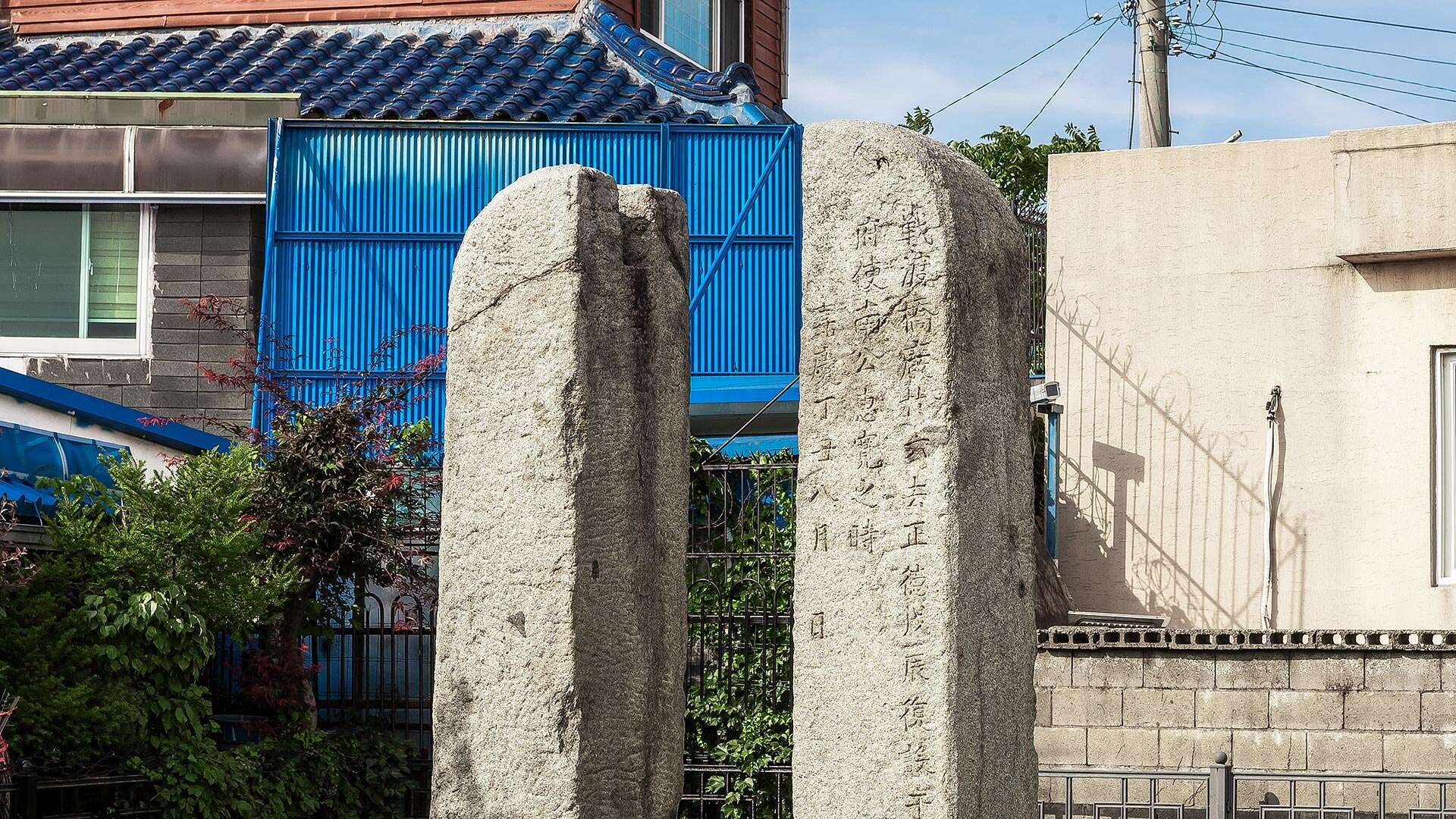
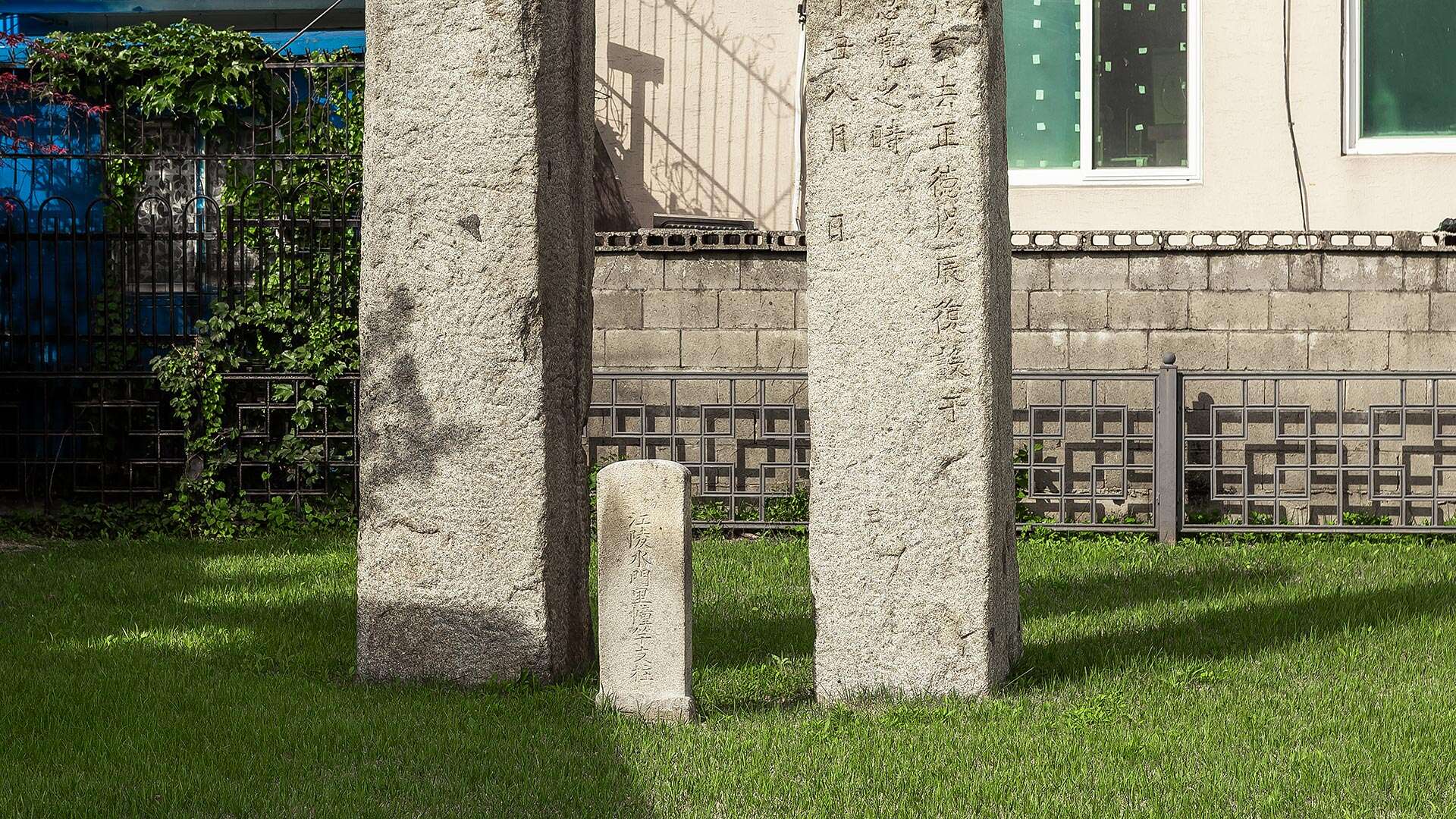
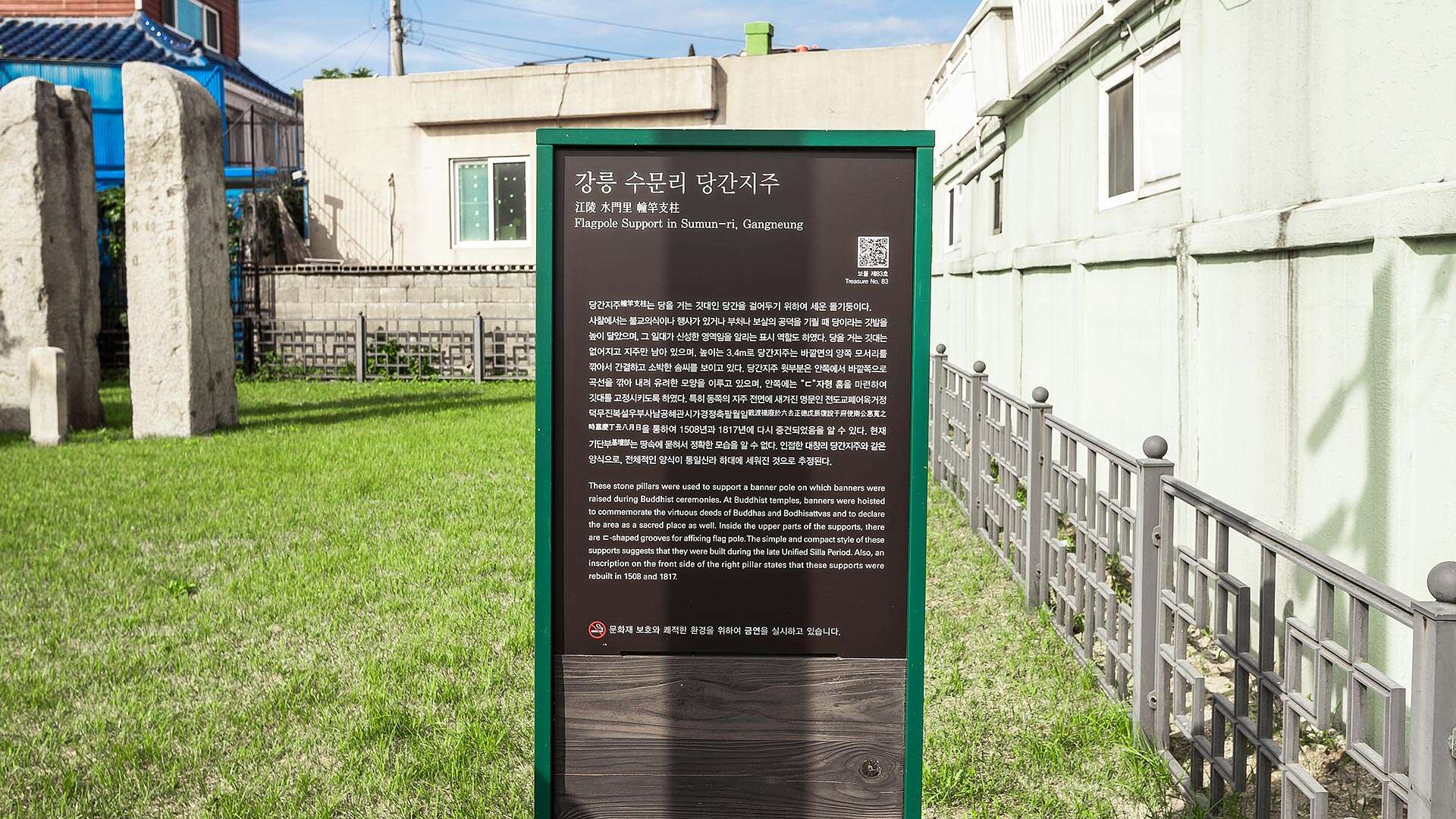
Designated as a National Heritage on January 21, 1963. These two 3.7m-tall pillars stand 1m apart, facing each other from east to west. While the surfaces lack intricate carvings, the tops are carved into elegant quarter-circle curves when viewed from the front and back, giving them a very fluid silhouette. The pillars taper slightly toward the top.
Tourist Guide
The supports feature a rectangular groove (ganggu) at the inner top to secure the flagpole. While the stone-working technique is not overly sophisticated, the semi-circular pillar heads perfectly represent the architectural style of the Unified Silla period. An inscription in regular script (haeseo) on the south side of the eastern pillar indicates that it was re-erected in 1817.
Tourist Tips
Actual "danggan" (flagpoles) are rare because they were mostly made of wood, which decays over time. However, the stone supports (dangganjiju) remain in many places. In Gangneung alone, you can find them in three locations: Daechang-ri, Sumun-ri, and Gulsansaji.